ICE
Photographs from Mount Edith Cavell and Angel Glacier 1984 - 2013
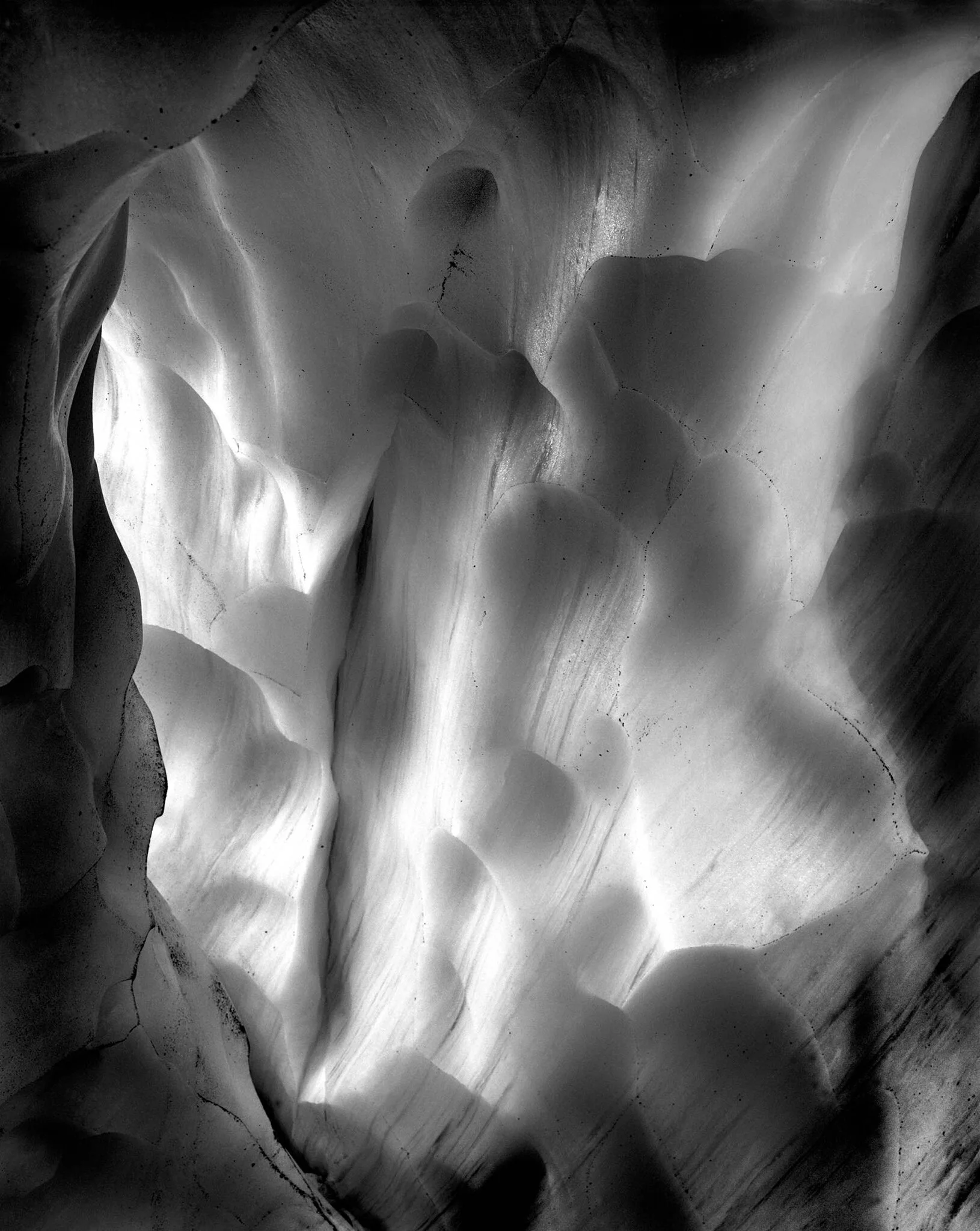
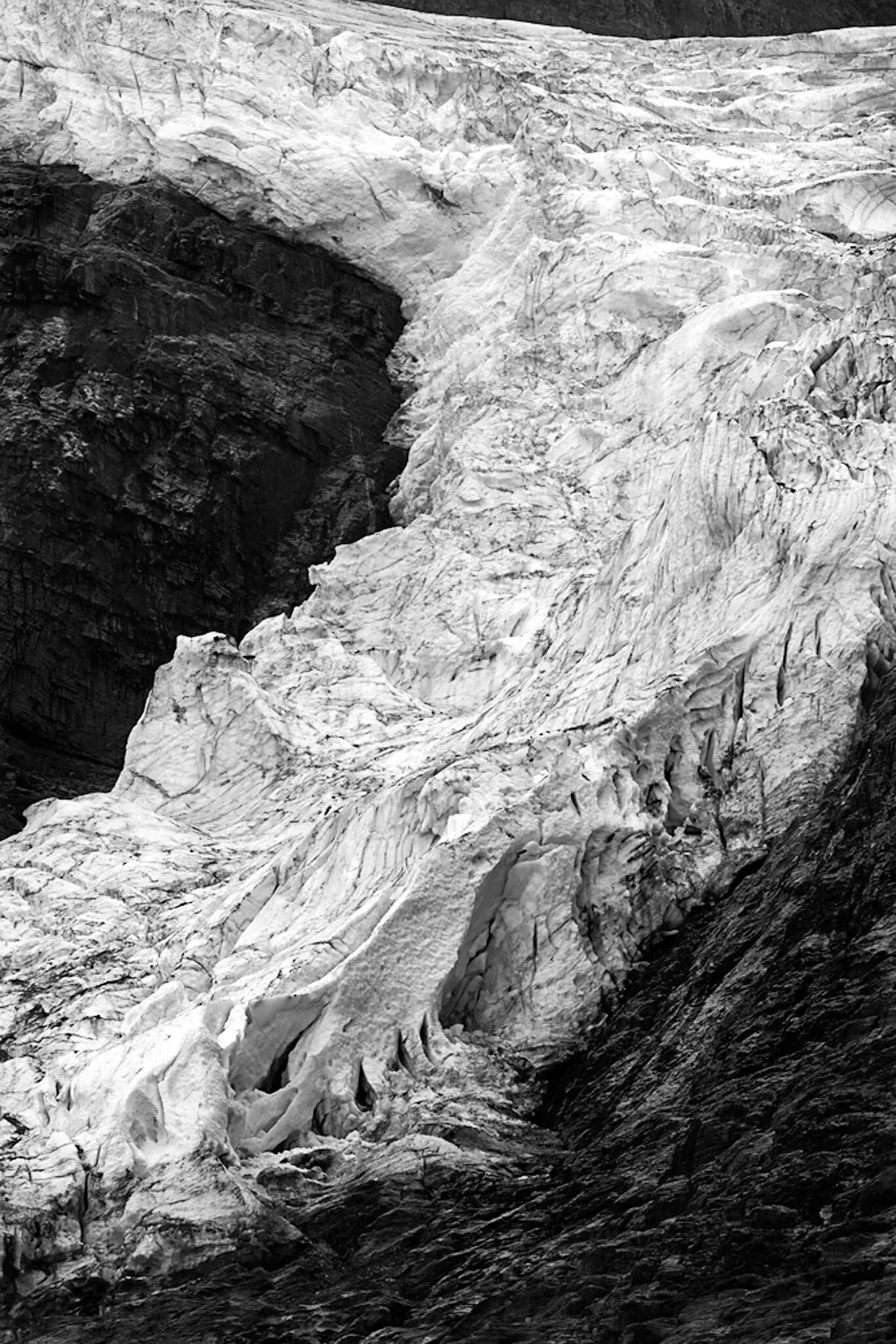
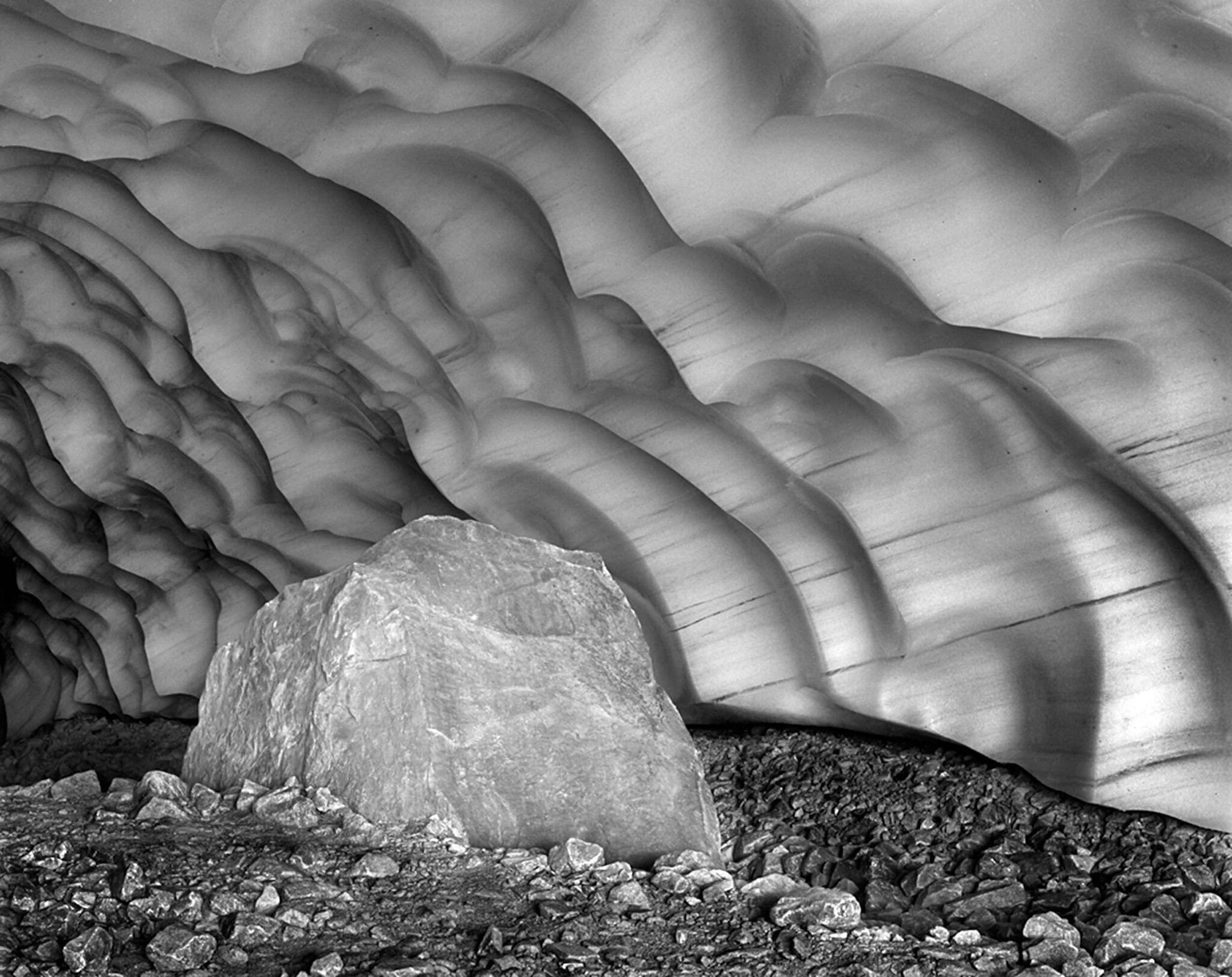
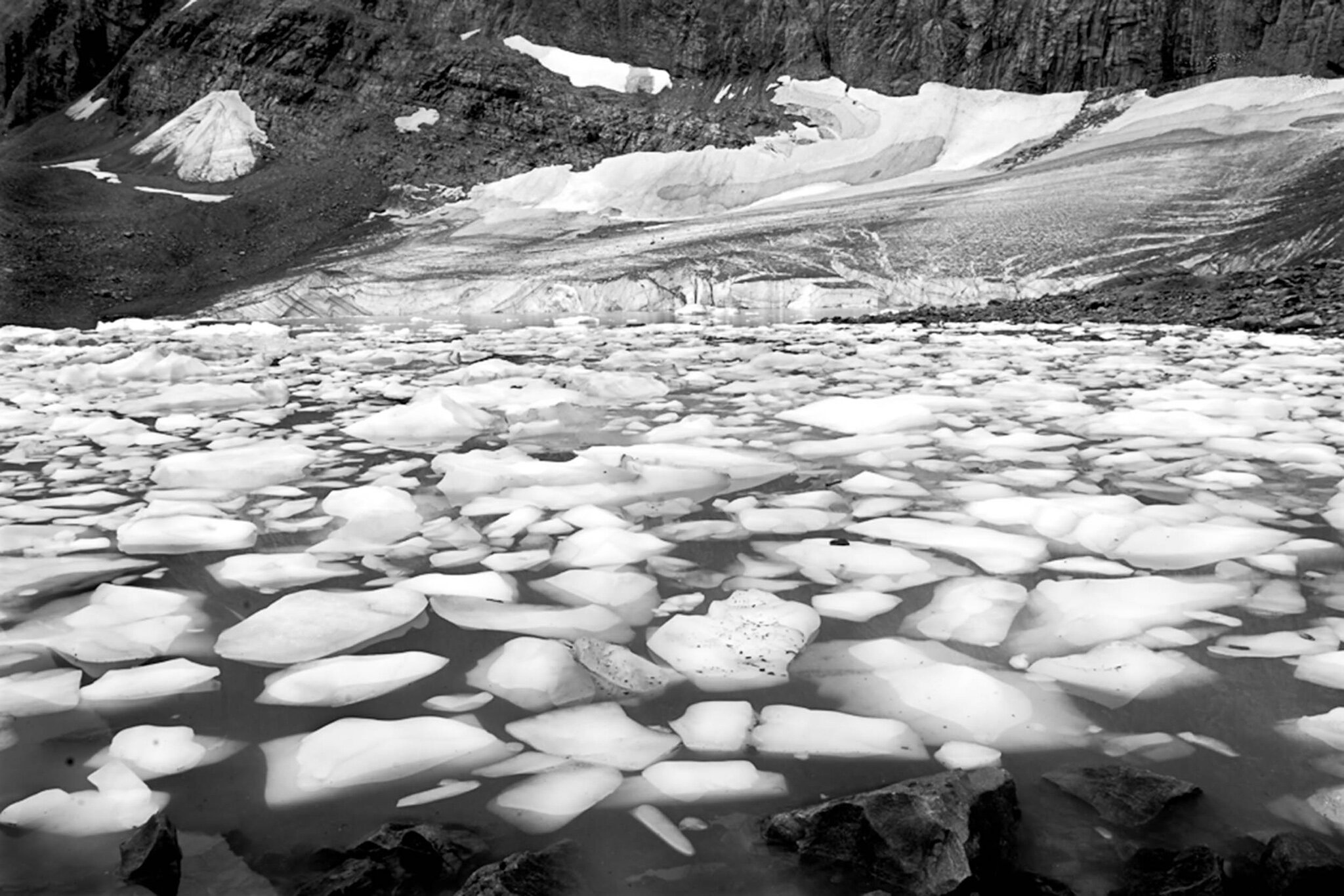
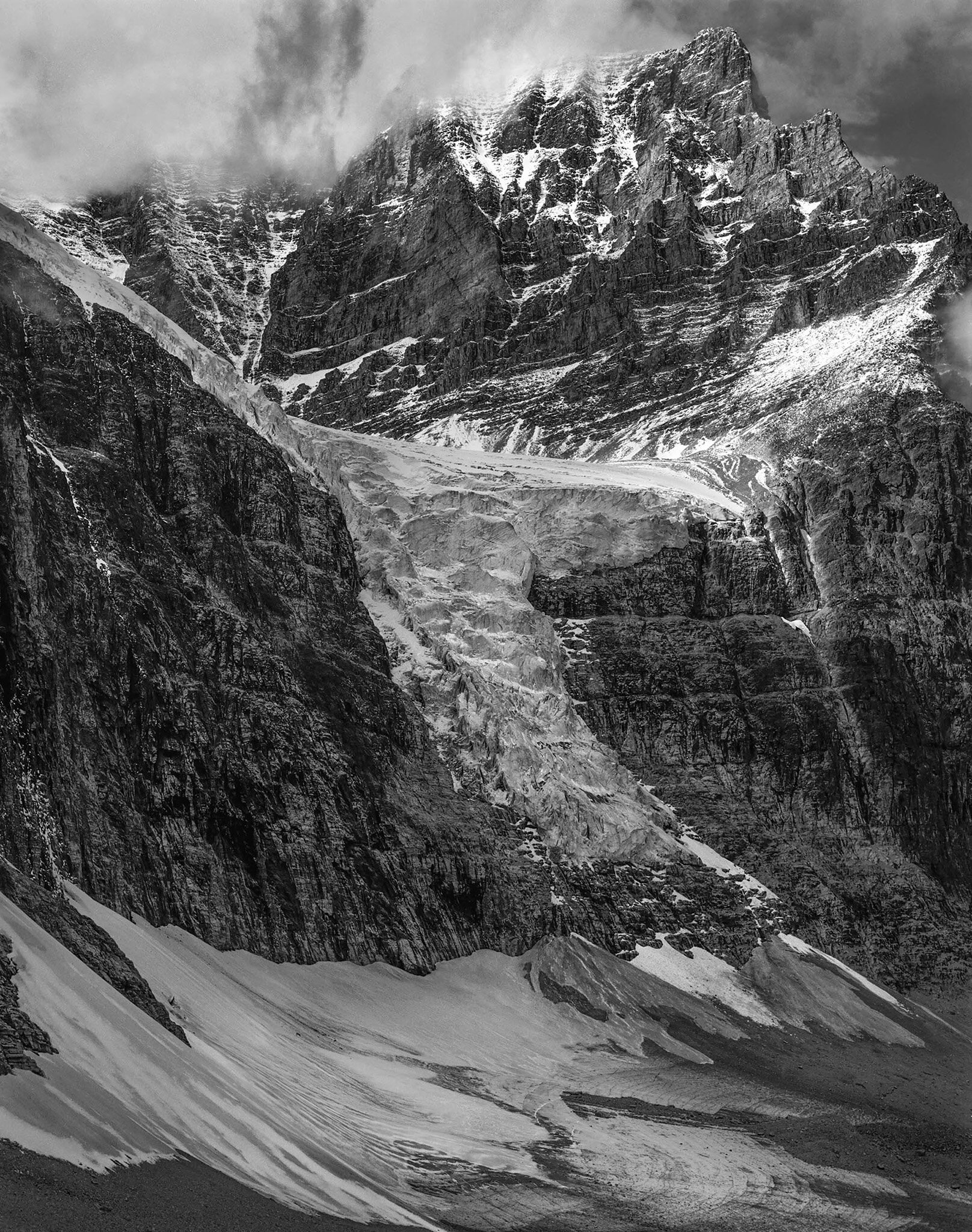
This is a few of my ice image from Angel Glacier. None of this ice exists today.

Glacier Ice from Angel Glacier at Edith Cavell in the Canadian Rockies
I photographed Angel Glacier at Mount Edith Cavell throughout the 1990s, returning every fall to watch and record a mountain slowly losing its ice. These images—blue ridges, fractured seracs, and melting faces—are not just pictures; they are a visual inventory of something that no longer exists. Very little of that glacier remains today; none of the specific ice formations in these photographs survive.
In the lens the glacier was an object of texture and light: glassy blue ice with trapped bubbles, the striated faces where winter’s compression met summer’s melt, and the ephemeral sculptures carved by wind and sun. Up close, the ice revealed layers of time—ancient compression bands, ash-speckled layers from distant fires, and refrozen meltwater that trapped the sky. From a distance, the glacier read as a slow-motion river frozen against the rock, its broken teeth and hanging plumes announcing a dynamic, precarious life.
Photographing there every fall meant returning to the same viewpoints as the ice shifted year to year. Small changes—an icefall collapsed, a crevasse widened, a serac retreated—added up to dramatic transformation over a decade. The camera became a witness to decline: images that at first seemed to document remote permanence gradually took on an elegiac quality. The blue that once dominated many frames faded in extent; soon the carved faces were interrupted by bare rock and rubble fields where ice had once clung.
The scale of loss felt personal because of repetition. Standing in the same windy spots season after season, I learned the glacier’s pace: not sudden, but relentless. Meltwater grooves deepened, debris accumulated, and the glacier’s terminus crept uphill. Weather mattered—warm summers and reduced snowfall accelerated change—but the long-term pattern was unmistakable.
Beyond the geology and the visual drama, these photographs are records of change for viewers who may never see the glacier in person. They hold evidence of climate-driven retreat and the local consequences: altered alpine hydrology, less summer meltwater feeding downstream systems, and the disappearance of landscape features that once shaped routes, views, and memory.
There is also a human element to these images. Each frame carries the choices I made—framing, exposure, moment—and the conditions under which I worked: cold fingers on the camera, shifting light, the hush of high alpine air. Those practical details anchor the photographs to a lived experience, making the loss more tangible than abstract data.
Today, when I look back through those 1990s photographs, they feel like fragments from an old film. They capture an ice world that no longer exists, and they remind us that landscapes are not permanent backdrops but stories in motion. Preserving these images is not nostalgia alone; it is a form of witness—visual testimony to how an iconic glacier changed in a human lifetime.
Photographs from Mount Edith Cavell and Angel Glacier 1984 - 2013
This is a few of my ice image from Angel Glacier. None of this ice exists today.